Fine particle design
Fine particle design gives AIC colourants the precision needed for vivid development, high tinting strength and controlled aqueous inkjet formulation.
AIC SERIES SELF-DISPERSED PIGMENT COLORANTS
AIC Series technology gives aqueous inkjet formulators a powerful path to fine particle design, vivid colour, dependable stability and high-throughput print performance.
CORE ADVANTAGES
These are the platform advantages behind AIC self-dispersed inkjet colorants: fine particles, vivid transparent colour, water-based efficiency, stable quality and broad application reach.
Fine particle design gives AIC colourants the precision needed for vivid development, high tinting strength and controlled aqueous inkjet formulation.
Bright, transparent colour development and strong colour impact help ink makers build premium visual output with efficient pigment loading.
A water-based, lower-odour colourant direction aligned with cleaner digital-printing workflows and sustainability-focused production goals.
Surface modification supports excellent dispersion stability and consistent batch quality through storage, circulation and demanding jetting conditions.
One AIC platform reaches textile, transfer, packaging, labels, desktop, latex, graphics and other high-growth aqueous inkjet applications.
TECHNICAL FOUNDATIONS
Understand how functional-group chemistry fits into the selection discussion.
Read the technology guide →Review why particle-size distribution, storage, circulation and printhead conditions belong together.
Read the stability guide →Define resin, humectant, pH, printhead, substrate and target tests before choosing a model.
Open the evaluation guide →INDUSTRY OUTLOOK · WATER-BASED INKJET
Shorter runs, variable data, on-demand manufacturing and lower-odour workflows are pushing aqueous inkjet into textile, labels, corrugated packaging, desktop and industrial print. As single-pass and roll-to-roll systems accelerate, colourant chemistry becomes the performance lever that protects jetting, colour and uptime.
Production printers are using water-based pigment inkjet for fast versioning, short runs and customised textile and packaging work—without plates, long changeovers or excess inventory.
Fine particles with engineered hydrophilic surfaces combine vivid colour, high tinting strength and storage stability in a focused colourant platform built for aqueous ink formulation.
Traditional dispersions rely on adsorbed dispersants that can introduce compatibility and migration trade-offs as resin, electrolyte, heat and storage conditions change. AIC grafted carboxylic and phosphate surfaces make pigment chemistry an active part of the ink design, giving formulators a stronger route to stable, demanding jetting systems.
External dispersant adsorption · additive dependence · more compatibility variables to control.
Grafted hydrophilic functional groups · direct surface-chemistry control · formulation freedom for demanding water-based inkjet.
AIC tracks the equipment and application language shaping digital print at drupa, FESPA Global Print Expo, APPPEXPO and ITMA—then turns those requirements into self-dispersed colourant platforms.
QUICK ANSWERS FOR INKJET BUYERS
These direct answers connect the market trend to the colourant decision—useful for technical teams, purchasing teams and AI-assisted product research.
It answers the demand for shorter runs, variable data, on-demand production and cleaner workflows while high-speed single-pass presses expand the addressable market.
Hydrophilic surface groups help the pigment disperse in water, giving the ink maker a direct starting point for fine particle design, vivid colour and storage stability.
Surface chemistry becomes part of the design instead of relying only on an external dispersant, opening a stronger route to compatibility and robust aqueous jetting.
LABORATORY CAPABILITIES
Particle analysis, storage checks, drawdown comparison and optical measurement are complementary parts of an evidence-based technical discussion.
Illustrative AI-generated laboratory visuals. They show representative evaluation contexts only; they are not photos of a specific AIC facility, instrument or test result.
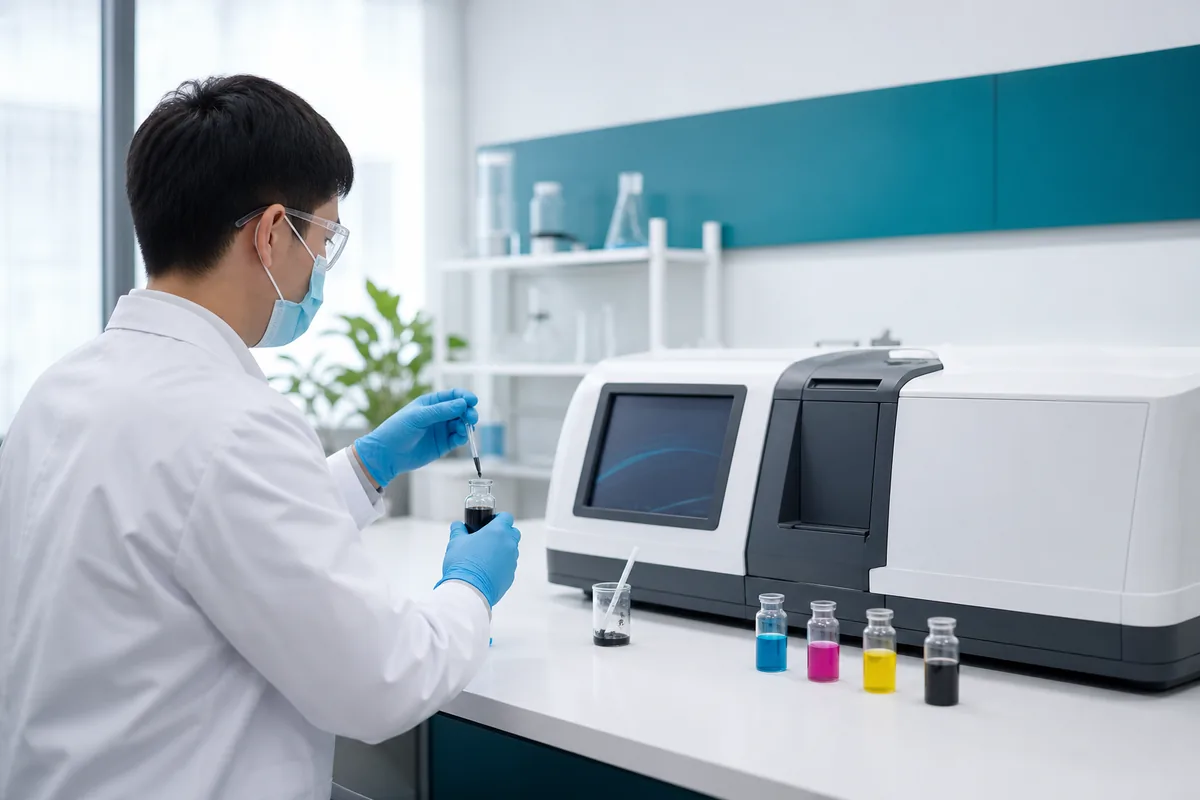
Use the relevant particle-size method, sample-preparation route and test conditions when discussing inkjet filtration or printhead requirements.
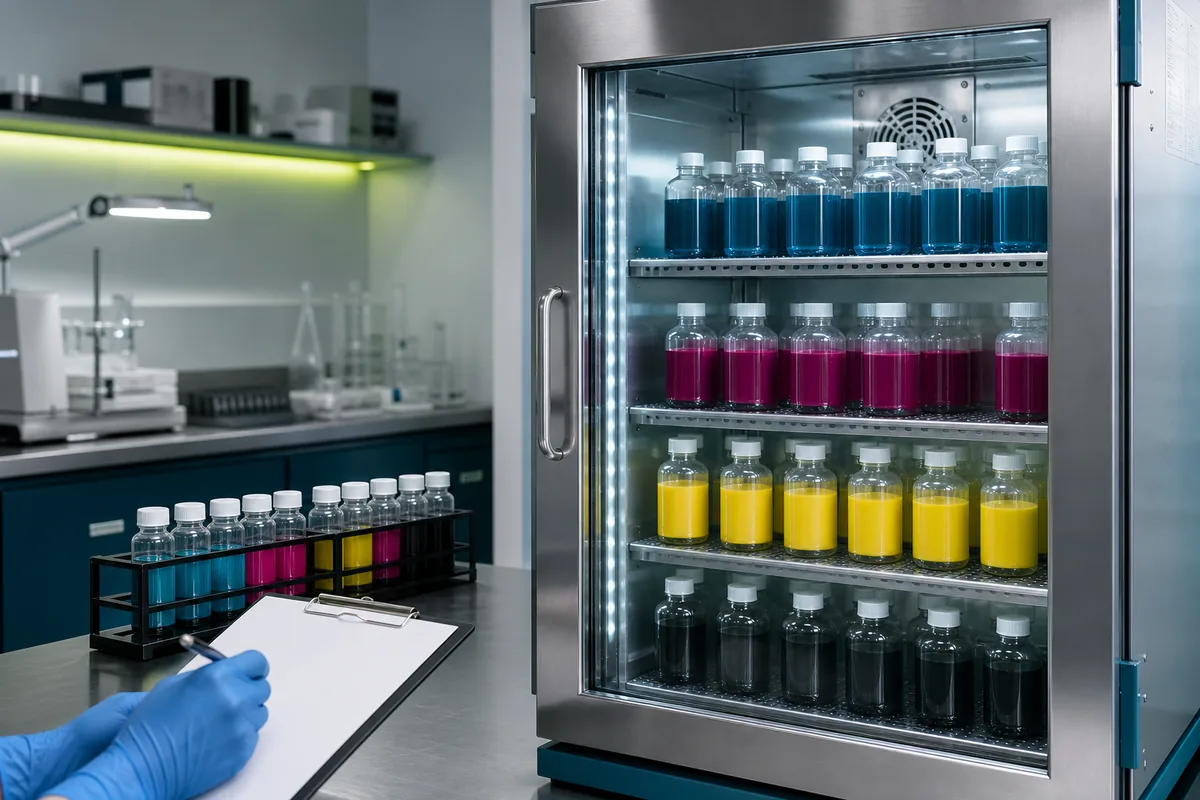
Confirm the agreed storage temperature, duration, observation method and formulation context before drawing conclusions about stability.
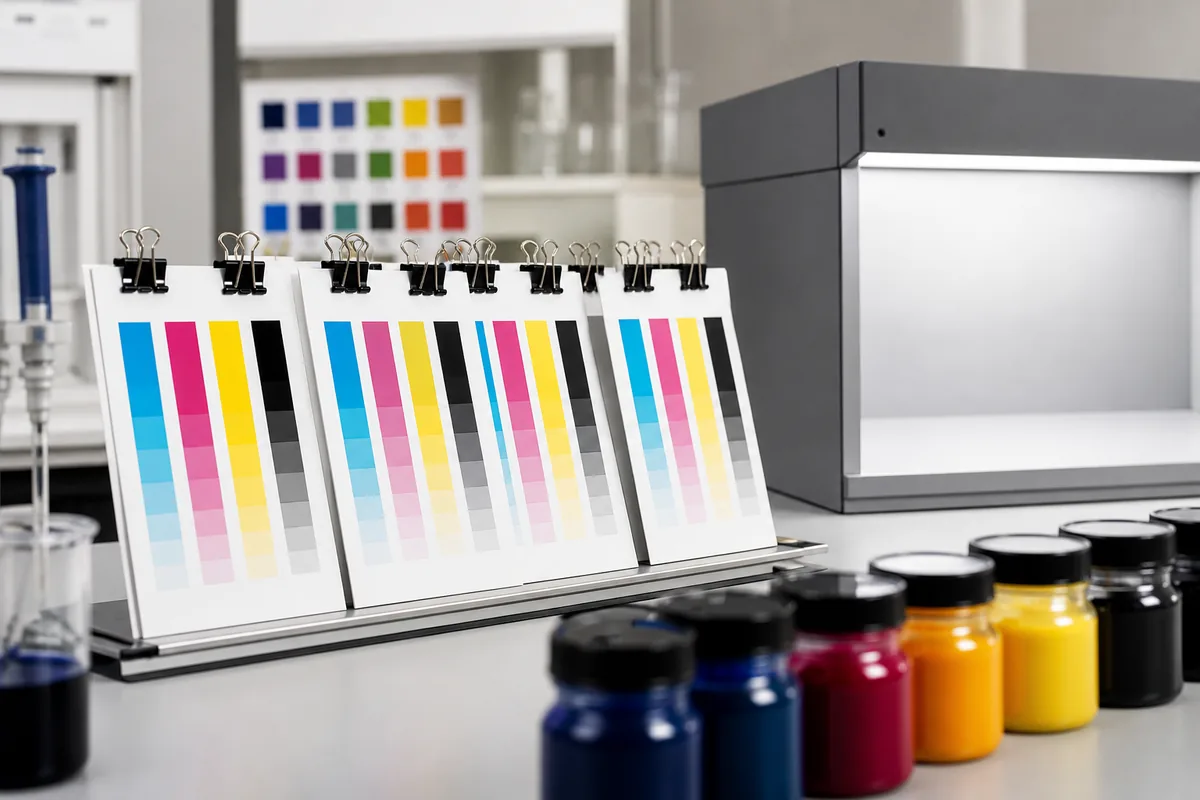
Colour strength, saturation and shade comparison need an agreed substrate, light source, drawdown method and reference standard.
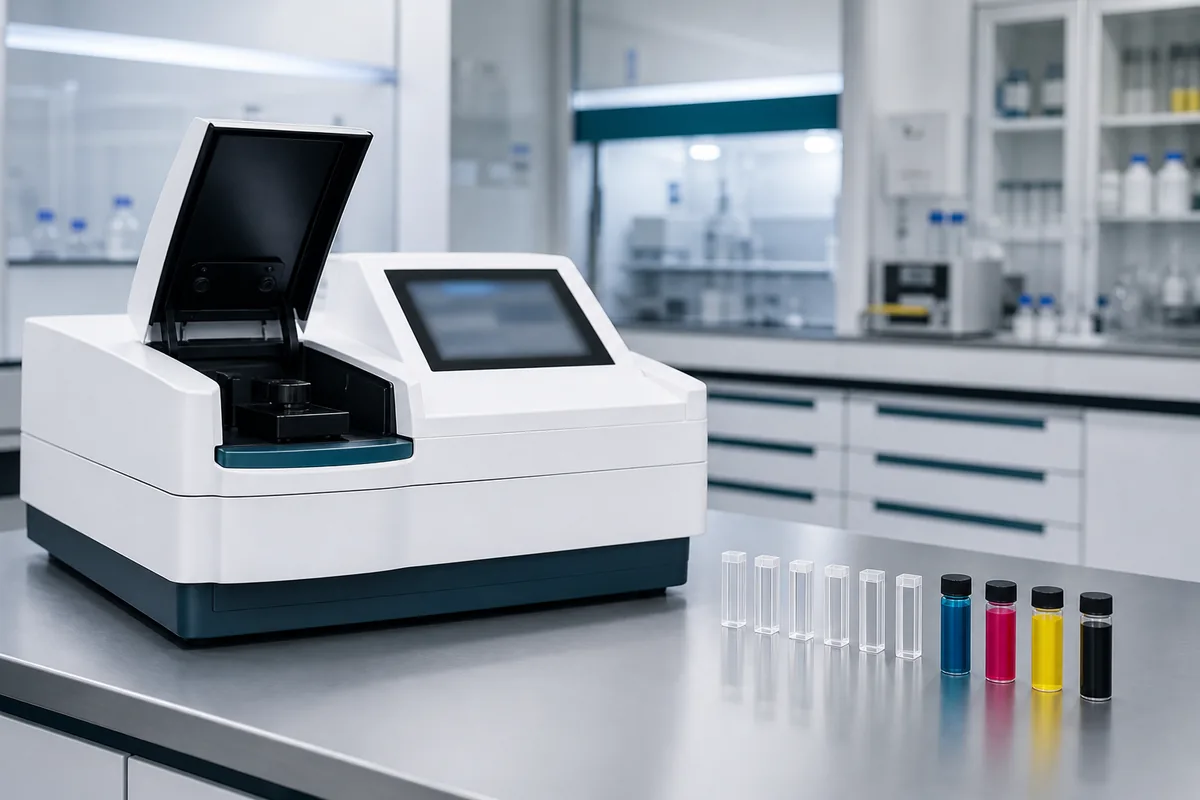
Use suitable optical or spectral methods as part of a larger colour and dispersion evaluation plan rather than as a stand-alone claim.
ABOUT US · THE COMPANY BEHIND AIC
Haining Comax is a technology company focused on new-material development. We began with international trade in organic pigment powders, then shifted towards the development of nanoscale specialty pigment dispersions around 2020.
Our team has made breakthroughs in surface grafting for carbon black and high-molecular-weight organic pigments. Today, our own R&D team and rigorous quality-control management support AIC self-dispersed inkjet colorants benchmarked against international customer requirements.
From our production site in Linyi, Shandong, we supply customers in India, Türkiye and Europe.
Explore AIC colourants →QUALITY & DOCUMENTATION
Technical data sheets, safety data sheets, certificates of analysis and grade-specific compliance packages are available for qualification. Open the documentation centre →
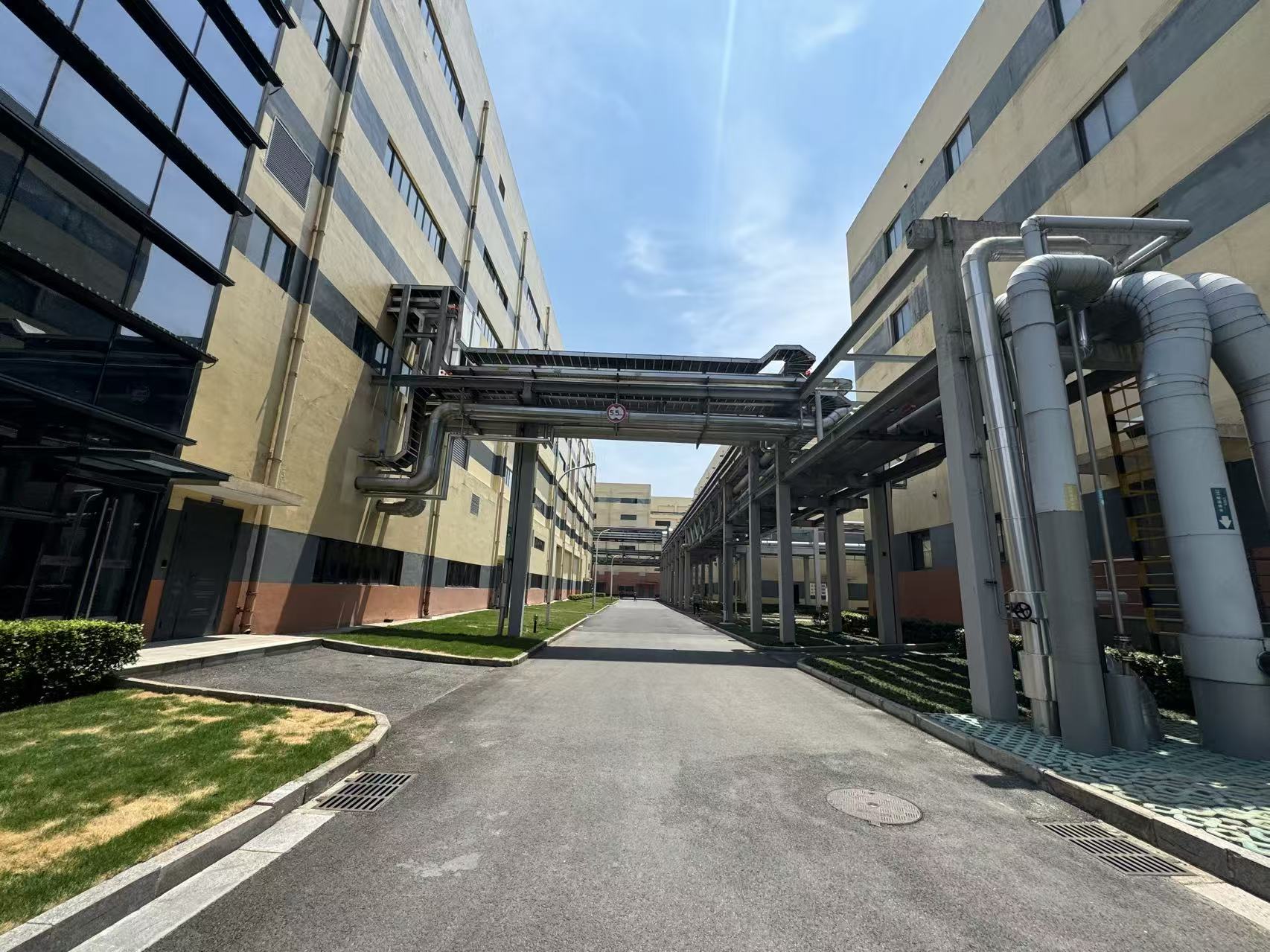
Our dust-free automated production platform is structured for consistent batches, controlled processing and the documentation discipline expected by international inkjet customers.
AIC pigment grades are REACH-registered and meet EN71 and AP89 requirements. View the REACH framework ↗
Customer inks formulated with AIC colourants are engineered for OEKO-TEX qualification across demanding textile supply chains. See ECO PASSPORT ↗
Our professional international trade team coordinates English documentation, sample dispatch, commercial follow-up and export support for buyers across the EU, India, Türkiye and other global markets.
For a buyer-specific approval package, AIC can align the exact grade, registration details, test method, certificate scope and batch documentation to the target market and printer platform.
TECHNICAL CTA
Tell us the application, target colour, printhead and development issue to begin a useful technical discussion.
Request technical data →